


Glutathione is the tripeptide γ-L-glutamyl-L-cysteinylglycine, the most abundant non-protein thiol in mammalian cells, at millimolar concentration.
Its γ-linkage, on the glutamate side chain and not the α-carbon, resists most peptidases, and it is made by two cytosolic enzymes, not by ribosomes. In mammals, eight glutathione peroxidases (GPx1 to GPx8) have been described[1].
Glutathione is the cofactor these peroxidases use, along with the S-transferases and glyoxalases, and the GSH/GSSG ratio is the standard redox index. Reversible S-glutathionylation of protein cysteines is reported as a redox signal[2].
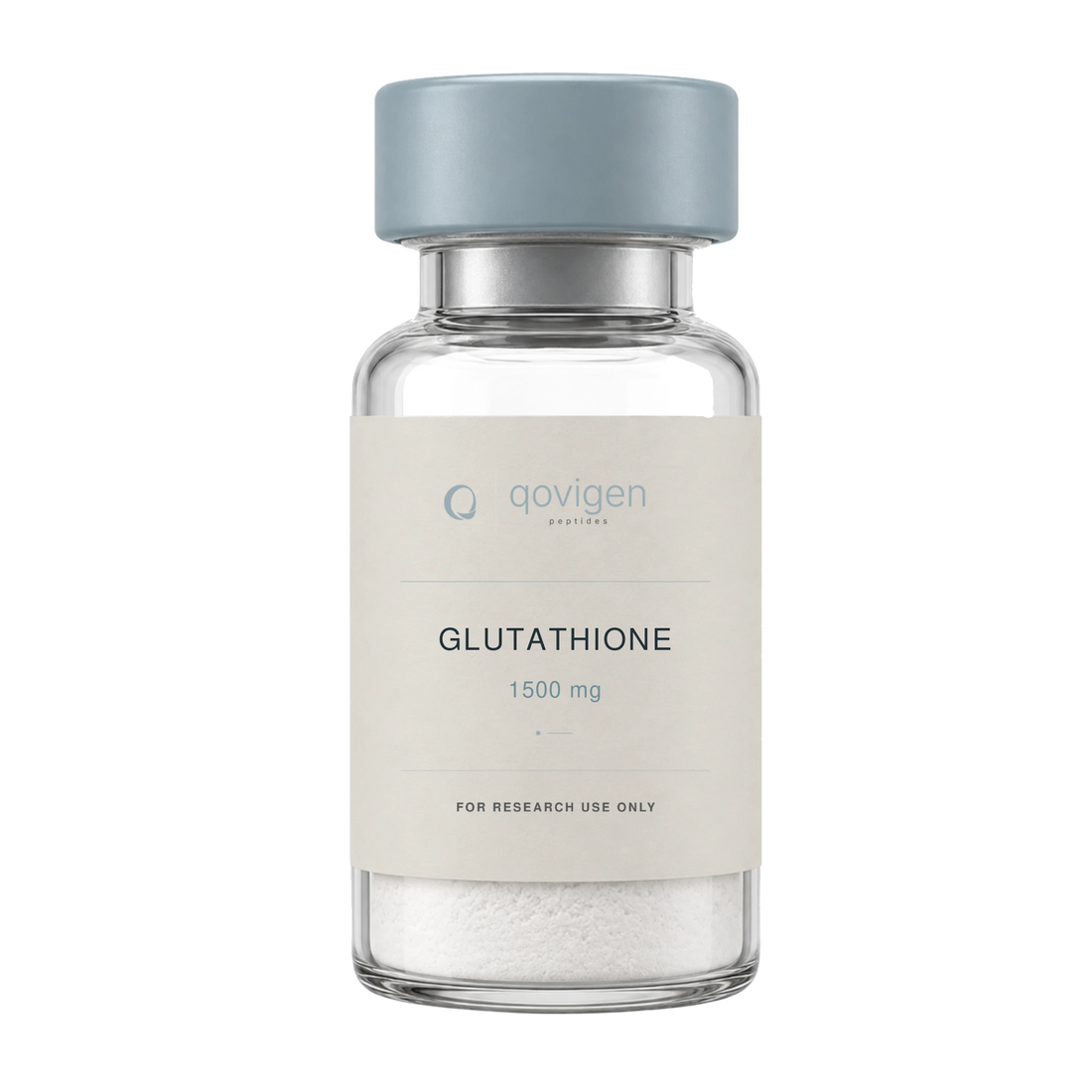
Supplied as a lyophilized powder for reconstitution. Findings above come from preclinical (animal and cell-based) research on these molecules and are provided as scientific reference for laboratory research only.
Couldn't load pickup availability
Need reconstitution solution? Don’t forget to add Bacteriostatic Water — available as a quick add in your cart before checkout.
γ-Glu-Cys-Gly Tripeptide
The Most Abundant Non-Protein Thiol in Mammalian Cells
Glutathione (GSH) is a tripeptide of glutamate, cysteine and glycine. Its defining structural feature is the γ-glutamyl linkage: the glutamate residue is joined through its side-chain carboxyl rather than the usual α-carbon, which is why ordinary peptidases cannot cleave it.
- Three residues: Glutamate – Cysteine – Glycine
- γ-linkage makes the molecule resistant to most peptidases
- Present in all mammalian tissues at millimolar concentration
- The reactive thiol sits on the central cysteine
- Synthesised in the cytosol by two ATP-dependent enzymes, not by ribosomes

GSH / GSSG and Enzyme Cofactor Roles
Both a Direct Reductant and a Cofactor for Three Enzyme Families
GSH works in two ways. It reacts directly with radicals and electrophiles, and it serves as the obligatory cofactor for glutathione peroxidases, glutathione S-transferases and the glyoxalases. Oxidation converts two GSH to one GSSG; glutathione reductase and NADPH regenerate the pool. The GSH/GSSG ratio is the standard readout of cellular redox state.
- Eight mammalian glutathione peroxidases identified (GPx1–GPx8)
- Three GST families: cytosolic, mitochondrial and microsomal (MAPEG)
- Reversible S-glutathionylation of protein cysteines as a redox signal
- Rate-limiting synthesis step is glutamate cysteine ligase (GCLC/GCLM)
- Transcriptional control via Nrf2/ARE, AP-1 and NF-κB
Research Applications
A Standard Reagent Across Redox and Detoxification Assays
Glutathione is one of the most thoroughly characterised molecules in cell biology, and it is used as much as a reagent and reference standard as it is a subject of study.
- GSH/GSSG ratio measurement as an oxidative-stress readout
- Substrate and cofactor in glutathione peroxidase and reductase assays
- Conjugation substrate in GST activity assays (CDNB and related)
- Studies of S-glutathionylation and reversible cysteine modification
- Methylglyoxal and dicarbonyl-stress work via the glyoxalase system
- Regeneration of vitamin E and ascorbate in coupled antioxidant assays
The Science Behind Glutathione: An Unusual Tripeptide With an Enormous Literature
Glutathione is a tripeptide — γ-L-glutamyl-L-cysteinylglycine — and it is genuinely unusual. Most peptides are assembled by ribosomes and linked through standard α-peptide bonds. Glutathione is built by two dedicated cytosolic enzymes, and its first bond is a γ-linkage from the glutamate side chain. That single structural quirk is what protects it from intracellular peptidases and lets it accumulate to millimolar concentrations.
Its chemistry all comes down to one thiol group on the central cysteine. That thiol reduces peroxides, reacts with electrophiles, and forms mixed disulfides with protein cysteines. Two molecules of GSH oxidise to one of glutathione disulfide (GSSG), and glutathione reductase regenerates them at the cost of NADPH — which is why the GSH/GSSG ratio became the standard laboratory index of cellular redox state.
Beyond acting alone, glutathione is the required cofactor for three enzyme families. The glutathione peroxidases — eight of them in mammals — reduce hydroperoxides. The glutathione S-transferases, in cytosolic, mitochondrial and microsomal families, conjugate electrophilic xenobiotics and endogenous reactive aldehydes. The glyoxalases handle methylglyoxal. Reviews from Meister and Anderson in 1983 through to Averill-Bates in 2023 trace how this picture went from “antioxidant” to a molecule involved in protein folding, cell cycle regulation, apoptosis and ferroptosis.
Synthesis itself is tightly regulated: cysteine availability and the activity of glutamate cysteine ligase set the rate, under transcriptional control by Nrf2, AP-1 and NF-κB.
For laboratories working on oxidative stress, xenobiotic metabolism, redox signalling or thiol chemistry, glutathione is foundational material.
For research use only. Not for human consumption.
Scientific Literature
- Meister A, Anderson ME. Glutathione. Annu Rev Biochem. 1983;52:711-60.
- Lu SC. Glutathione synthesis. Biochim Biophys Acta. 2013;1830(5):3143-53.
- Brigelius-Flohé R, Maiorino M. Glutathione peroxidases. Biochim Biophys Acta. 2013;1830(5):3289-303.
- Hayes JD, Flanagan JU, Jowsey IR. Glutathione transferases. Annu Rev Pharmacol Toxicol. 2005;45:51-88.
- Averill-Bates DA. The antioxidant glutathione. Vitam Horm. 2023;121:109-41.
Packaged with care, shipped fast.
The Qovigen Difference
Glutathione – 1500 mg — Qovigen vs. a typical supplier.
Qovigen

Glutathione – 1500 mg
Qovigen Peptides
Competitor

Glutathione – 1500 mg
Typical Competitor
01 /
Higher Purity
02 /
Better Price
03 /
Faster Shipping
04 /
Verified Quality

After testing more than $8,500 worth of vials over the past year, Qovigen ranks first — set apart by genuinely new production technology.
Dr Aimen Arij
Doctor of Pharmacology · Lead Writer, dosagepeptide.com