


AOD-9604 is the C-terminal lipolytic fragment of human growth hormone (hGH 176–191) — the fat-metabolism domain of the hormone, isolated from the rest of the molecule.
In preclinical research, chronic AOD-9604 significantly reduced body-weight gain and increased fat oxidation and lipolysis in obese mice[1][2].
Critically, and unlike full hGH, AOD-9604 did not raise blood glucose or suppress insulin, and it does not bind the hGH receptor or the IGF-1 pathway[2] — separating fat metabolism from growth-hormone side effects.
Supplied as a lyophilized powder for reconstitution. Figures above summarize published preclinical (animal) research on this molecule and are provided as scientific reference for laboratory research only.
Couldn't load pickup availability
Need reconstitution solution? Don’t forget to add Bacteriostatic Water — available as a quick add in your cart before checkout.
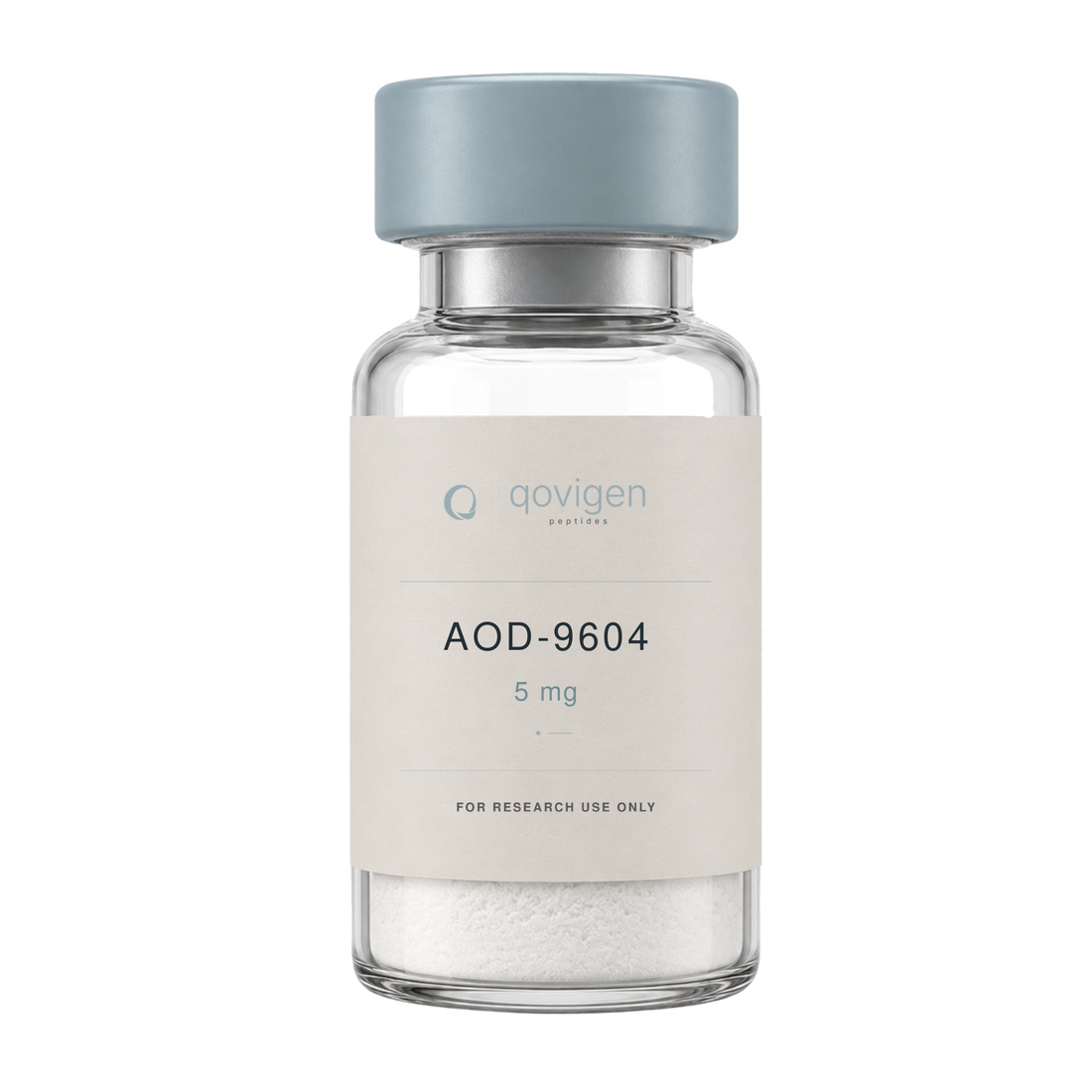
Modified HGH Fragment
Fat Metabolism Without IGF-1: The Isolated Lipolytic Domain
AOD-9604 is a modified 16-amino-acid C-terminal fragment of human growth hormone (Tyr-hGH 177-191) with a stabilizing disulfide bridge. Unlike full HGH, AOD-9604 retains only the lipolytic domain — stimulating fat breakdown and inhibiting lipogenesis without affecting IGF-1 levels or glucose tolerance. Phase 2b trials in 300 obese individuals showed the peptide tripled weight loss compared to placebo with a safety profile indistinguishable from placebo.
- 16-amino-acid fragment: Tyr-hGH 177-191 with disulfide bridge
- Stimulates lipolysis (fat breakdown)
- Inhibits lipogenesis (fat storage)
- No meaningful IGF-1 elevation
- Placebo-like safety profile in human trials

Multi-Pathway Mechanism
How AOD-9604 Achieves Fat Loss Without HGH Side Effects
AOD-9604 was originally thought to work exclusively via β3-adrenergic receptors on white adipose tissue. However, research in β3-AR knockout mice revealed fat loss still occurs — indicating at least two distinct mechanisms. The secondary pathway may involve direct induction of apoptosis in white fat cells. This dual-mechanism approach explains the peptide's robust efficacy while maintaining metabolic safety — no antibody formation, no insulin resistance, no glucose intolerance.
- β3-adrenergic receptor activation (shifts fat to "usage mode")
- Secondary pathway: Possible adipocyte apoptosis induction
- Works even in β3-AR knockout models
- No antibody formation (structural similarity to HGH)
- No insulin resistance or glucose intolerance
Expanding Research Applications
From Obesity to Joint Repair and Cardiovascular Protection
Beyond fat metabolism, AOD-9604 research has expanded into unexpected territories. Intra-articular injections show synergistic effects with hyaluronic acid in osteoarthritis models — improving pain, disability, and cartilage structure at both gross and microscopic levels. Cardiovascular research suggests the peptide may improve metabolic markers beyond its obesity effects, similar to pioglitazone and acipimox — potentially through the same secondary pathway that enables β3-AR-independent fat loss.
- Obesity: Tripled weight loss vs placebo in Phase 2b
- Osteoarthritis: Synergy with hyaluronic acid, cartilage improvement
- Cardiovascular: Metabolic benefits beyond fat reduction
- Steady weight loss rate (no resistance development)
- Novel cartilage growth pathway research
The Science Behind Targeted Fat Metabolism: Why AOD-9604 Isolates What Matters
AOD-9604 represents an elegant approach to fat metabolism research. By isolating the C-terminal lipolytic domain of human growth hormone (amino acids 177-191) and adding a stabilizing disulfide bridge, researchers created a peptide that retains HGH's fat-burning properties while eliminating its effects on IGF-1, insulin sensitivity, and glucose tolerance. This selective profile enables metabolic research impossible with full HGH.
The clinical evidence is substantial. Phase 2b trials in Australia tested AOD-9604 in 300 obese individuals over 12 weeks. Results showed the peptide tripled weight loss compared to placebo, with weight loss rates remaining steady throughout — indicating no resistance development and suggesting longer protocols would yield greater results. Safety was indistinguishable from placebo across six human studies including both IV and oral administration.
Mechanistically, AOD-9604 operates through at least two pathways. The primary mechanism involves β3-adrenergic receptor activation on white adipose tissue, shifting fat cells from storage to utilization mode. However, research in β3-AR knockout mice revealed fat loss still occurs — confirming a secondary mechanism, potentially involving direct adipocyte apoptosis. This dual-pathway approach may explain the peptide's robust efficacy.
Research applications have expanded beyond obesity. Intra-articular AOD-9604 injections show synergistic effects with hyaluronic acid in osteoarthritis models, improving pain scores and cartilage structure at both gross and microscopic levels — a finding relevant to the challenging problem of cartilage regeneration. Cardiovascular research suggests metabolic benefits beyond weight loss. For teams investigating fat metabolism, metabolic syndrome, osteoarthritis, or cardiovascular risk, AOD-9604 provides a uniquely targeted tool with extensive human safety data.
For research use only. Not for human consumption.
Scientific Literature
- Heffernan M, Summers RJ, Thorburn A, Ogru E, Gianello R, Jiang WJ, Ng FM. The effects of human GH and its lipolytic fragment (AOD9604) on lipid metabolism following chronic treatment in obese mice and beta(3)-AR knock-out mice. Endocrinology. 2001;142(12):5182-9.
- Heffernan MA, Thorburn AW, Fam B, Summers R, Conway-Campbell B, Waters MJ, Ng FM. Increase of fat oxidation and weight loss in obese mice caused by chronic treatment with human growth hormone or a modified C-terminal fragment. Int J Obes Relat Metab Disord. 2001 Oct;25(10):1442-9.
Packaged with care, shipped fast.
The Qovigen Difference
AOD-9604 – 5 mg — Qovigen vs. a typical supplier.
Qovigen

AOD-9604 – 5 mg
Qovigen Peptides
Competitor

AOD-9604 – 5 mg
Typical Competitor
01 /
Higher Purity
02 /
Better Price
03 /
Faster Shipping
04 /
Verified Quality

After testing more than $8,500 worth of vials over the past year, Qovigen ranks first — set apart by genuinely new production technology.
Dr Aimen Arij
Doctor of Pharmacology · Lead Writer, dosagepeptide.com